 admin
adminWhy Off-Highway Autonomous Vehicles Will Scale Faster Than Self-Driving Cars
Introduction: The Autonomous Revolution Is Moving Off the Highway
For years, the public narrative around autonomous vehicles has focused on self-driving cars navigating city streets. Major automotive companies and technology firms have invested billions of dollars in developing autonomous driving systems designed for public roads.
Yet despite this massive investment, fully autonomous passenger vehicles remain limited in deployment and regulatory approval.
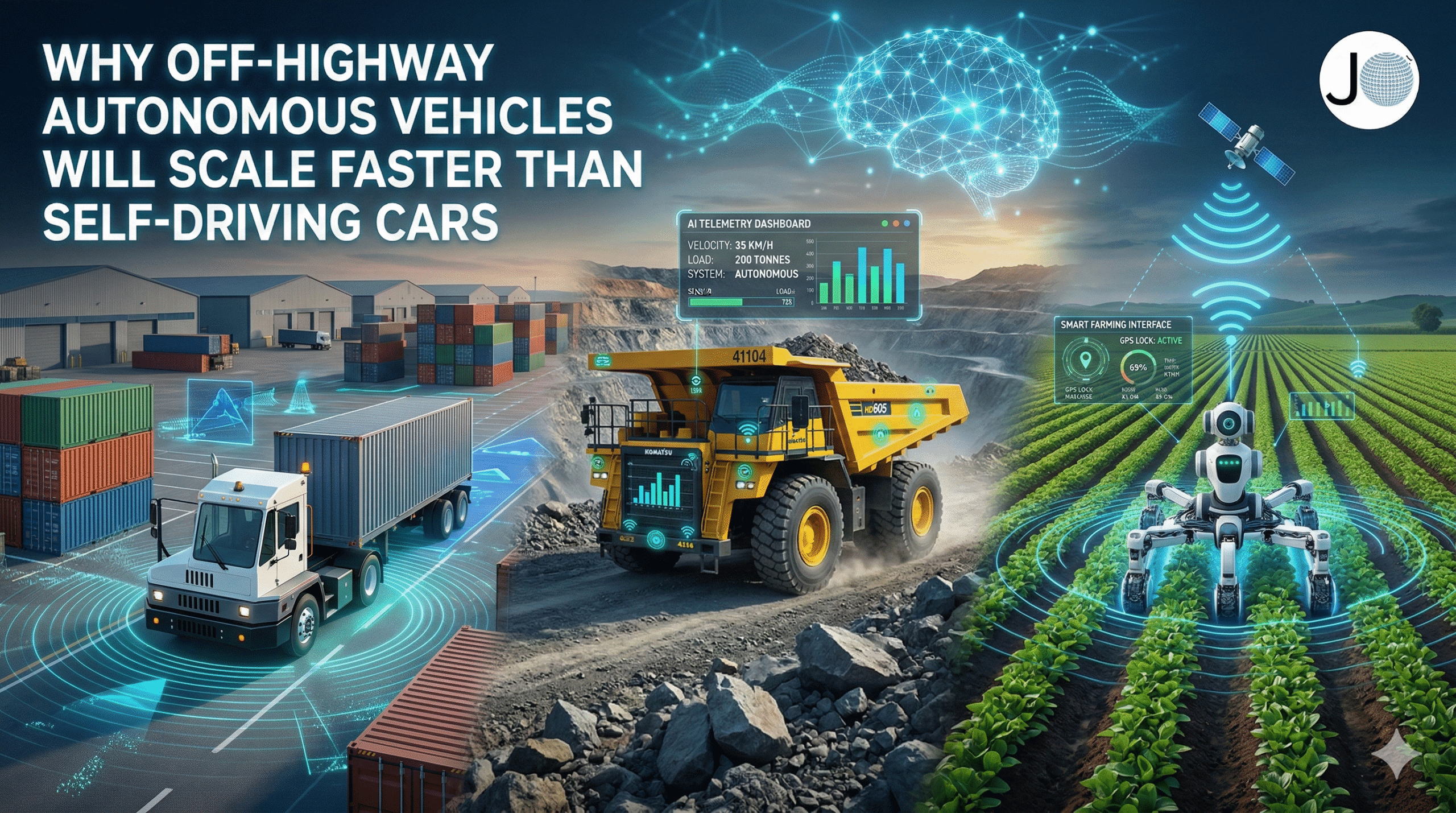
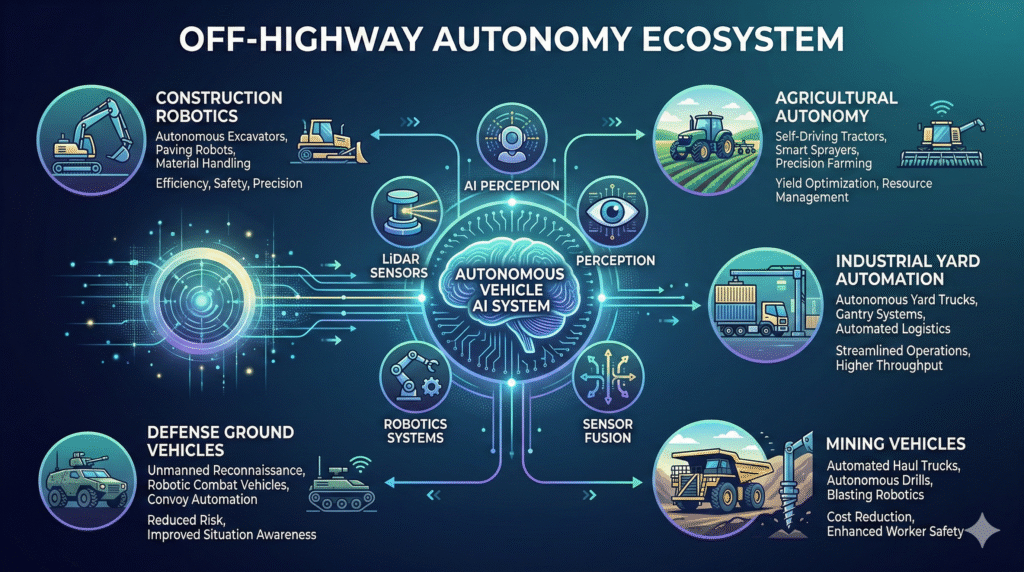
Meanwhile, a quieter but far more rapid transformation is happening in industries outside urban roads. Across construction sites, agricultural fields, industrial yards, mining operations, and defense environments, autonomous vehicles are already operating and scaling quickly.
These systems are known as off-highway autonomous vehicles — machines designed to operate in controlled environments rather than public traffic systems.
The combination of AI perception systems, LiDAR sensors, and robotics automation is enabling these vehicles to perform complex tasks in challenging environments.
As a result, off-highway autonomy is emerging as the fastest-growing segment of the autonomous vehicle industry.
Why Self-Driving Cars Face Significant Barriers
Urban self-driving vehicles face several major challenges that slow their large-scale deployment.
Complex and Unpredictable Environments
City roads are highly dynamic. Autonomous vehicles must interpret:
unpredictable pedestrian behavior
cyclists and motorcycles
complex traffic rules
construction zones
weather and lighting changes
Even advanced AI models struggle to achieve consistent reliability in such complex environments.
Regulatory and Safety Requirements
Autonomous passenger vehicles operate on public roads, which introduces strict regulatory oversight. Governments require extensive safety validation before approving deployment.
These regulatory hurdles significantly slow adoption.
Edge Case Explosion
Urban driving introduces countless rare or unusual scenarios, often referred to as edge cases.
Examples include:
emergency vehicles appearing suddenly
unusual road signage
temporary construction detours
unexpected human behavior
Training AI models to handle every edge case requires massive datasets and extremely sophisticated perception systems.
Off-Highway Autonomous Vehicles: A Faster Path to Deployment
Unlike self-driving cars, off-highway autonomous vehicles operate in structured industrial environments, which makes autonomy easier to implement and scale.
These vehicles include:
autonomous construction equipment
agricultural robots and tractors
autonomous mining trucks
industrial yard vehicles
defense ground robots
Because these systems operate within defined operational zones, they avoid many of the complexities associated with public road driving.
This allows companies to deploy autonomous solutions faster while still maintaining safety.
Autonomous Construction Vehicles Are Already Operating
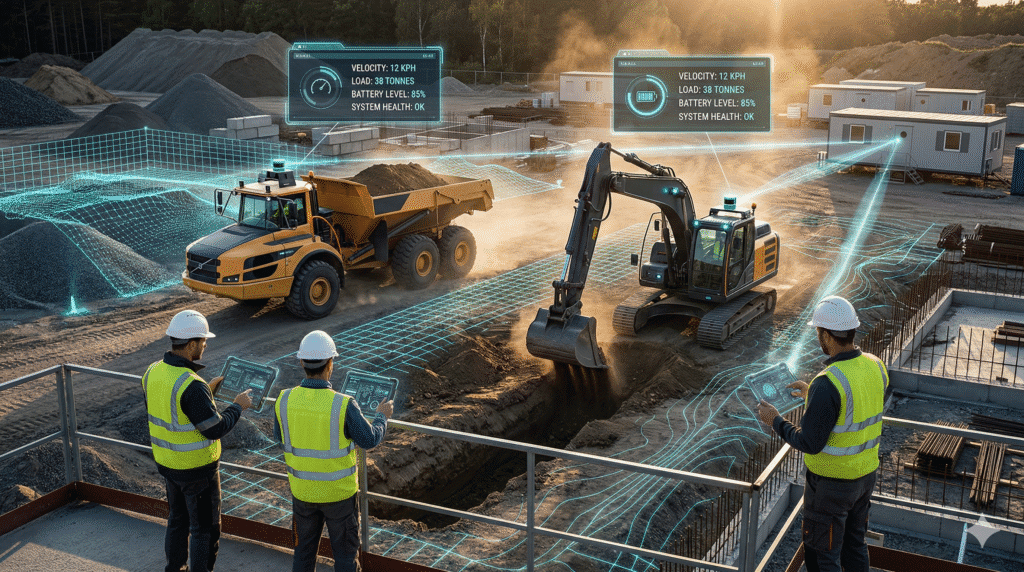
Construction sites are among the earliest adopters of autonomous vehicle technology.
Heavy machinery used in construction performs repetitive tasks such as:
transporting materials
earthmoving
excavation
site grading
These activities are well suited for AI-powered autonomous machinery.
Autonomous construction vehicles use LiDAR-based perception systems and real-time mapping algorithms to navigate complex construction environments while detecting workers, equipment, and obstacles.
Benefits include:
improved worker safety
reduced operational downtime
increased productivity
optimized construction logistics
As infrastructure development increases globally, construction robotics will continue expanding rapidly.
Agricultural Autonomy Is Transforming Farming
Agriculture is another sector where autonomous vehicles are scaling quickly.
Farm operations involve repetitive processes across large areas, making them ideal for automation.
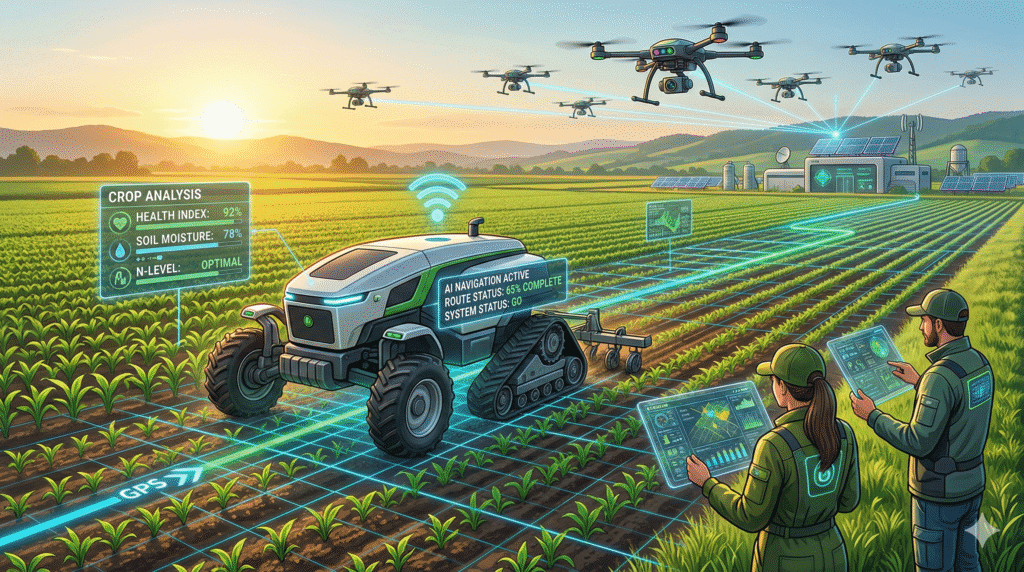
Autonomous agricultural vehicles now perform tasks such as:
automated planting
precision spraying
crop monitoring
autonomous harvesting
These machines use sensor fusion technologies combining LiDAR, cameras, GPS, and AI models to navigate fields, identify crop rows, and detect obstacles.
Autonomous farming systems also help optimize the use of:
water
fertilizer
pesticides
This improves both crop yields and environmental sustainability.
As global food demand continues to rise, agricultural autonomy will become a key component of modern farming systems.
Industrial and Yard Automation
Industrial logistics operations are increasingly adopting autonomous vehicles to improve efficiency.
Large industrial sites such as:
shipping ports
container yards
warehouses
manufacturing plants
require constant transportation of goods and materials.
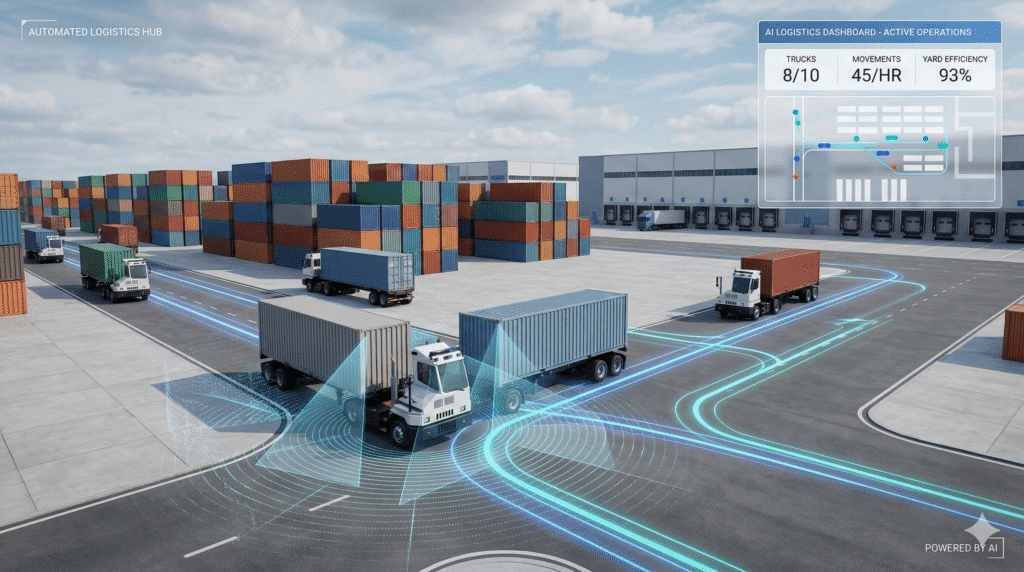
Autonomous yard trucks and logistics vehicles can perform these tasks continuously without human intervention.
These vehicles rely on AI perception systems and sensor fusion technologies to navigate industrial environments, avoid collisions, and optimize routes.
The benefits include:
faster logistics operations
reduced labor dependency
improved safety
optimized supply chain management
Yard automation is becoming a key component of industrial digital transformation strategies.
The Role of AI Perception and Data Infrastructure
The rapid growth of off-highway autonomous vehicles is made possible by advances in AI perception and data infrastructure.
Autonomous systems rely on large volumes of sensor data to understand their environments.
Key data sources include:
LiDAR point clouds
camera imagery
radar signals
GPS and localization data
AI models are trained using annotated datasets that help machines identify objects, terrain, and operational hazards.
High-quality data pipelines are essential for building reliable perception systems capable of operating in complex industrial environments.
As autonomy expands across industries, the demand for specialized datasets, annotation workflows, and perception training infrastructure will continue to grow.
The Future of Autonomous Mobility
The future of autonomous vehicles will extend far beyond urban transportation.
In the coming years, we will see rapid expansion across industries such as:
construction robotics
agricultural automation
mining vehicles
industrial logistics systems
defense robotics
Off-highway autonomy offers a practical and scalable pathway for AI-driven mobility systems.
While self-driving cars continue to evolve, autonomous vehicles operating in industrial environments are already delivering measurable value.
These systems are transforming how industries build infrastructure, produce food, move goods, and conduct operations.
The autonomous revolution is not waiting for city streets — it is already accelerating across the world’s construction sites, farms, industrial yards, and operational landscapes.